

Introduction to AI (Artificial Intelligence) Uses Medical and Hospital Industry :
:
Artificial Intelligence Uses Medical and Hospital Industry is rapidly transforming the healthcare sector, changing the way hospitals operate, doctors diagnose diseases, and patients receive care. What once seemed like science fiction is now becoming an essential component of modern medicine. AI technologies such as machine learning, deep learning, natural language processing, and predictive analytics are helping healthcare providers make faster and more accurate decisions. Hospitals around the world are investing heavily in AI-powered solutions to improve efficiency, reduce costs, and enhance patient outcomes. In todya’s world AI uses in medical and hospital industry has been icreased widely, In most of the healthcare centers using advanced ai technology.
The healthcare industry generates enormous volumes of data every day, including patient records, laboratory reports, medical images, prescriptions, and treatment histories. Processing this information manually can be time consuming process for healthcare professionals. AI acts as a powerful assistant by analyzing massive datasets within seconds and identifying patterns that might be difficult for humans to detect. This capability enables healthcare providers to diagnose diseases earlier, personalize treatments, and optimize hospital operations.
The worldwide AI healthcare market was estimated to be worth $36.7 billion in 2025 and is expected to surpass $500 billion by 2033 according to recent industry reports, underscoring the remarkable expansion and demand for AI solutions in healthcare. Additionally, research indicates that around 79% of healthcare businesses are already using AI technologies in some way. These figures show that AI is becoming an essential component of healthcare delivery rather than just a new fad.
The Growing Importance of AI uses in medical and hospital industry :
Why Healthcare Needs AI
Hospitals today face numerous challenges, including increasing patient volumes, staff shortages, rising operational costs, and growing administrative burdens. Healthcare professionals often spend significant amounts of time on documentation and routine administrative tasks rather than direct patient care. AI offers a practical solution by automating repetitive processes and supporting clinical decision-making.AI Uses Medical and Hospital Industry has changed the for healthcare needs.
Imagine a hospital as a busy airport. Just as air traffic control systems help manage thousands of flights efficiently, AI helps hospitals manage patient care, appointments, diagnostics, and resource allocation. By reducing manual workloads, AI enables healthcare workers to focus on what matters most—treating patients.
Current Adoption Trends : AI Uses in Medical & Hospital Industry

The Following are the current adoption trends for AI Uses in medical and hospital industry.
AI adoption in healthcare continues to accelerate globally. Reports indicate that predictive AI systems are now used by a large percentage of hospitals to identify patient risks, predict readmissions, and improve care planning. India is also emerging as one of the most AI-ready healthcare markets in the Asia-Pacific region, driven by increasing demand for coordinated and efficient healthcare services.AI Uses in Medical & Hospital Industry is the key factor to change vital role in health care industry
AI Uses Medical and Hospital Industry : Precision Medicine AI-Powered Medical Diagnostics
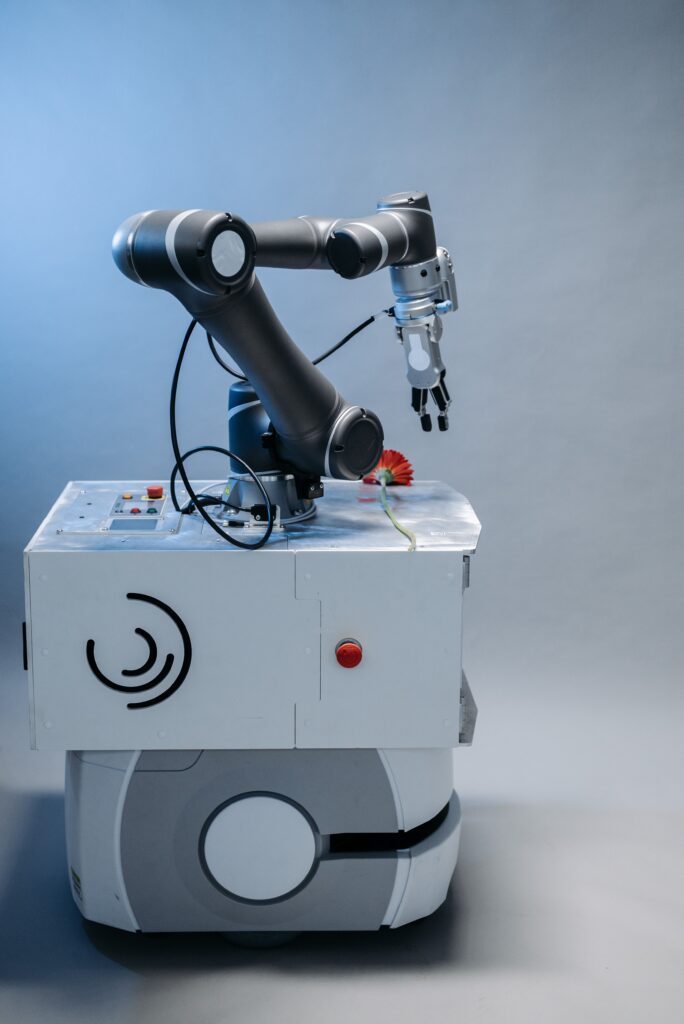
AI Uses Medical and Hospital Industry are Medical Imaging Analysisalthcare is medical imaging analysis. Radiologists examine thousands of X-rays, CT scans, MRIs, and mammograms every year. AI systems can analyze these images with remarkable speed and accuracy, helping physicians detect abnormalities that might otherwise go unnoticed.
Advanced AI algorithms can identify tumors, fractures, infections, and cardiovascular conditions within seconds. In many cases, AI serves as a second pair of eyes, reducing diagnostic errors and improving confidence in clinical decisions. Research conducted in India demonstrated AI systems achieving exceptionally high accuracy rates in detecting multiple chest X-ray pathologies, significantly reducing reporting times across healthcare facilities.
How AI uses in Medical and Hospital Industry : Early Diagnosis
AI is uses in medical and hospital industry is Early diagnosis often determines whether a patient experiences a successful recovery. AI excels at identifying subtle patterns in medical data that may indicate the early stages of disease. Conditions such as cancer, diabetes, Alzheimer’s disease, and heart disease can often be detected earlier with AI-assisted analysis.
By identifying warning signs before symptoms become severe, AI helps physicians intervene sooner and improve treatment outcomes. This proactive approach can save lives while reducing healthcare costs associated with advanced-stage disease treatment.
AI Uses Medical and Hospital Industry :AI in Personalized Treatment Plans
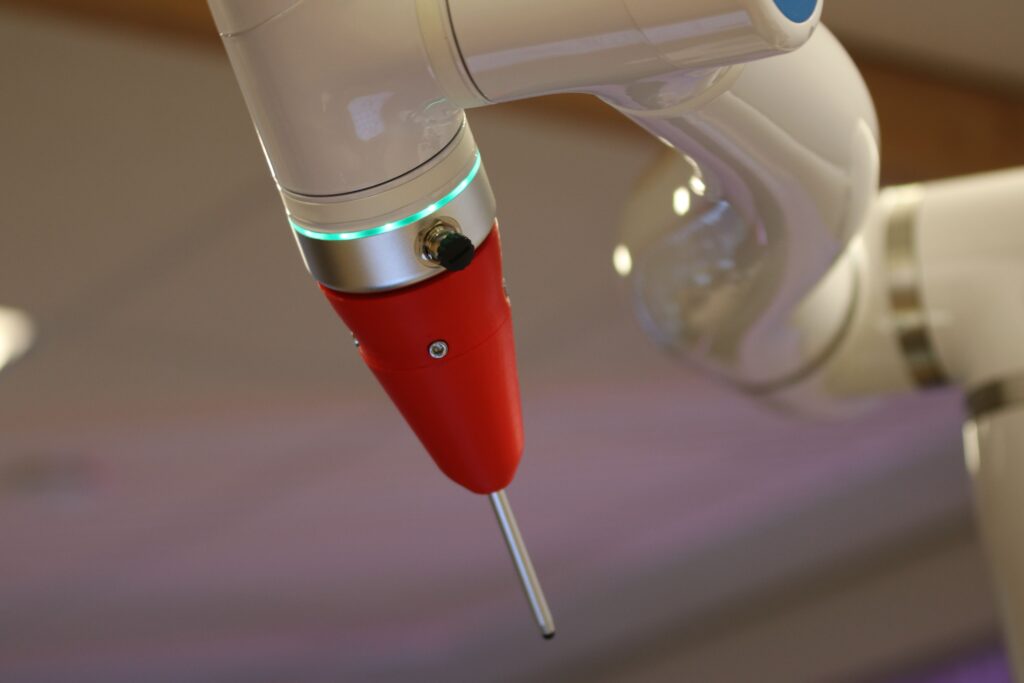
AI Uses Medical and Hospital Industry helpful to identify personalised treatment palns.
Every patient is unique, and a treatment that works for one individual may not be equally effective for another. AI Uses medical and hospital industry is to identify unique date of the patient records.
AI supports precision medicine by analyzing genetic information, lifestyle factors, medical history, and treatment responses to develop personalized care plans.
This tailored approach allows doctors to prescribe treatments that are more likely to succeed while minimizing adverse effects. Precision medicine is particularly valuable in oncology, where AI can help identify targeted therapies based on a patient’s specific genetic profile.
Predictive Analytics
Predictive analytics enables healthcare providers to anticipate future health risks before they become serious problems. AI can analyze patient data and identify individuals at risk of complications, hospital readmissions, or disease progression. Ai uses in medical and hospital industry has increased the productivity in healthcare industry.
For example, AI may recognize patterns suggesting that a patient with chronic heart disease is likely to experience worsening symptoms. Doctors can then adjust treatment plans proactively, potentially preventing hospitalization and improving quality of life.
AI Uses Medical and Hospital Industry : Precision MedicineAI in Hospital Operations
AI uses medical and hospital industry helps in Administrative Automation :
Administrative tasks consume a significant portion of healthcare professionals’ time. Scheduling appointments, processing insurance claims, maintaining records, and handling billing require extensive effort. AI-powered automation can streamline these processes and reduce operational inefficiencies.
Several healthcare organizations report significant productivity gains through AI implementation. Some AI solutions have reduced administrative workloads dramatically while improving service delivery and patient satisfaction.
Resource Management
Hospitals must manage resources carefully, including beds, medical equipment, medications, and staffing schedules. AI helps administrators forecast patient demand and allocate resources more efficiently. Resource management is potentially increased under the AI uses in medical and hospital industry.
For instance, predictive models can estimate emergency department admissions, enabling hospitals to prepare staff and equipment accordingly. This improves patient flow, reduces waiting times, and enhances overall operational performance.
Following are some of the functions in AI Uses in medical and hospital industry
|Hospital Function | Conventional Method | AI-Powered Method | |
| Patient Scheduling | Manual | Automated | | Resource Allocation | Reactive | Predictive | | Medical Records | Time-consuming | Intelligent Retrieval | | Staffing | Historical Estimates | Real-Time Forecasting |
AI Uses Medical and Hospital Industry : AI-Powered Virtual Assistants and Chatbots
AI chatbots and virtual health assistants are becoming increasingly common in hospitals and healthcare systems. These tools can answer patient questions, schedule appointments, provide medication reminders, and offer basic health guidance.
Patients gain from 24-hour access to assistance without having to wait on hold or visit a hospital. Routine questions are automatically handled, allowing staff to focus on more complex patient needs. Many hospitals are increasingly using conversational AI toenhance patient engagement and communication. These systems can help patients follow treatment programs, monitor symptoms, and give instructional resources that are personalized to their specific requirements.
AI Uses Medical and Hospital Industry :AI in Personalized Treatment Plans AI in Robotic Surgery
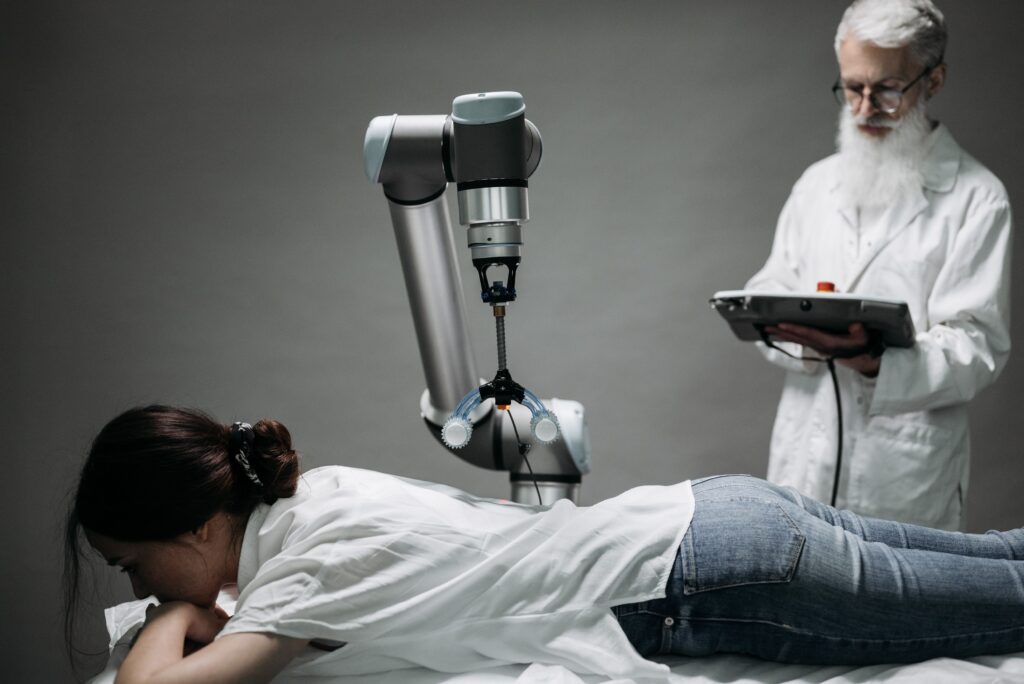
Benefits of Surgical Robots
Robotic-assisted surgery represents one of the most advanced applications of AI in medicine. Surgeons use AI-enhanced robotic systems to perform highly precise procedures with greater control and accuracy. One of the best sign in AI Uses in Medical And Hospital Industry is Surgical Robots is one of the best example.
These systems can minimize surgical errors, reduce blood loss, and improve recovery times. Small incisions lead to less pain, lower infection risks, and shorter hospital stays for patients. AI also helps surgeons analyze real-time data during procedures, supporting better decision-making.AI Uses in Medical and Hospital Industry get more benefical from the AI.
Although surgical robots do not replace surgeons, they enhance human capabilities and improve surgical outcomes. The combination of human expertise and machine precision is creating a new era of advanced surgical care.
AI in Drug Discovery and Research
Developing a new drug traditionally requires years of research and billions of dollars in investment. AI is dramatically accelerating this process by analyzing biological data, predicting molecular interactions, and identifying promising drug candidates. AI Uses Medical and Hospital Industry has reduced the cost and provide more benefit.
Researchers can use AI to screen millions of compounds rapidly and determine which have the highest likelihood of success. This shortens development timelines and reduces costs while increasing the chances of discovering effective treatments.
AI also plays a critical role in clinical trials by identifying suitable participants, monitoring outcomes, and analyzing results. These capabilities help pharmaceutical companies bring life-saving medications to market more efficiently.
AI for Remote Patient Monitoring
AI Uses Medical and Hospital Industry is Remote patient monitoring has gained tremendous importance in recent years, particularly for patients with chronic illnesses. AI-powered wearable devices can continuously track vital signs such as heart rate, blood pressure, oxygen levels, and glucose readings.
These systems alert healthcare providers when abnormalities are detected, allowing early intervention before conditions worsen. Patients benefit from greater independence while maintaining close medical supervision.
Remote monitoring is especially valuable for elderly patients and individuals living in rural areas where access to healthcare facilities may be limited. AI bridges the gap between hospitals and patients by delivering continuous care beyond hospital walls.
AI in Electronic Health Records
Although navigating massive amounts of data might be difficult, Electronic Health Records (EHRs) provide important patient information. AI improves EHR systems by facilitating clinical decision-making, organizing data, and extracting pertinent insights.
Natural Language Processing (NLP) enables AI to understand physician notes, laboratory reports, and discharge summaries. This helps clinicians access critical information quickly and reduces documentation burdens.
Many hospitals are integrating predictive AI directly into EHR platforms to identify patient risks, improve care coordination, and support evidence-based treatment decisions. Adoption of these integrated systems continues to grow across healthcare organizations.
Challenges and Ethical Considerations
Data Privacy
The Following are the some of the Challenges faced in AI Uses in Medical And Hospital Industry,
Healthcare data is highly sensitive, making privacy and security major concerns. AI systems require access to large datasets to function effectively, creating potential risks related to unauthorized access and data breaches.
Hospitals must implement strong cybersecurity measures, comply with regulatory requirements, and ensure patient information remains protected. Responsible data governance is essential for maintaining public trust.
Bias and Transparency
AI systems learn from historical data. If training data contains biases, AI models may produce unfair or inaccurate results. Ensuring transparency, fairness, and accountability is critical for ethical AI deployment.
Healthcare organizations must continuously evaluate AI systems to identify potential biases and verify performance across diverse patient populations. Experts emphasize that AI should support healthcare professionals rather than replace human judgment.AI uses in medical and hospital industry has increased the transperancy, and reduced the bias.
Future of AI in the Medical and Hospital Industry
The future of AI in healthcare looks incredibly promising. Emerging technologies such as generative AI, digital twins, predictive health modeling, and autonomous diagnostic systems are expected to reshape medical practice even further.
Healthcare leaders increasingly view AI as a strategic necessity rather than an optional innovation. Industry experts predict that AI will continue improving diagnostic accuracy, operational efficiency, patient engagement, and treatment personalization. Surveys show clinicians are optimistic about AI’s role in healthcare, with many expecting it to become an integral part of daily practice. AI Uses in Medical And Hospital Industry has changed vital role in this particular sector.
As hospitals continue to invest in AI technology, patients may expect faster diagnosis, improved treatment outcomes, and more tailored healthcare experiences. The cooperation of human skill and artificial intelligence will shape the next generation of medicine.
Conclusion
Artificial intelligence is transforming the medical and hospital industries by increasing diagnoses, patient care, operational efficiency, and medical research. AI is becoming a key healthcare tool, with applications ranging from medical image analysis and robotic surgery support to hospital workflow management and remote patient monitoring capabilities.
While challenges related to privacy, ethics, and governance remain important, the benefits of AI are undeniable. Hospitals that embrace AI technologies are positioning themselves to deliver safer, faster, and more efficient healthcare services. AI will become much more important in determining the direction of medicine and enhancing the health of millions of people globally as innovation progresses.
FAQs
- What does AI mean for healthcare?
AI in healthcare refers to the application of AI technology to support patient care, medical research, hospital administration, diagnosis, and treatment planning
- How does AI help doctors diagnose diseases?
AI analyzes medical images, patient records, laboratory results, and other healthcare data to identify patterns and detect diseases more accurately and quickly.
- Can AI take the place of medical professionals in hospitals?
Ai uses in medical and hospital industry has increased, But AI is intended to assist medical practitioners by offering automation and insights. Making medical decisions still need human skill.Ai can`t replace the human skills.
- What are the benefits of AI uses in medical and hoapital industry & health care?
Benefits include improved diagnostic accuracy, reduced administrative workload, better patient outcomes, enhanced operational efficiency, and lower healthcare costs.
- What are the challenges AI face in healthcare?
Major challenges include data privacy concerns, ethical issues, algorithmic bias, regulatory compliance, and the need for transparency and accountability.
6.Limited Human Judgment in AI Uses in Medical And Hospital Industry
While AI can analyze vast amounts of data quickly, it cannot fully replace human empathy, intuition, and clinical judgment. Doctors must still make final decisions based on patient-specific circumstances.
7.Limitations of AI Uses in Medical And Hospital Industry
Lack of emotional intelligence
Difficulty understanding unique patient situations
Dependence on human supervision